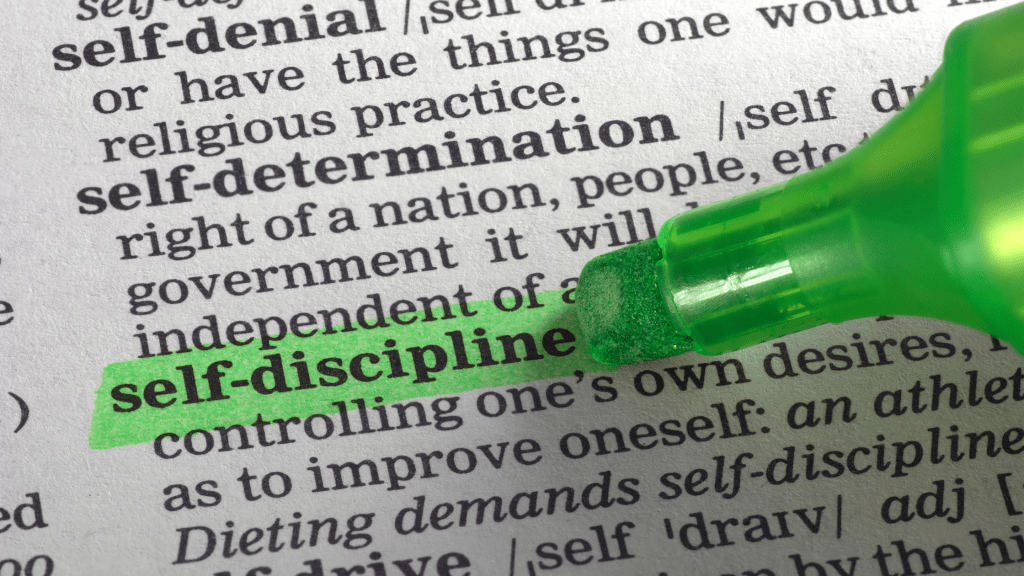
It is not uncommon at the beginning of a new year for us to focus on improvements we hope to make in our lives in the year ahead. One primary factor in determining how successful we will be in accomplishing these changes is our ability to exercise self-discipline.
When the topic of self-discipline is discussed, we often hear people claim that they struggle with overcoming temptation or have other excuses for not acting in their best interest. They claim their thoughts and feelings compel them to make the wrong choices. But self-discipline is more about actions than feelings.
Self-discipline is mostly about choosing the action that is best regardless of how we may feel. Over time, however, the more we force our self to choose well, the more our thinking falls in line and the better we feel about ourselves.
Growing up as a child, my mother used to talk to me about a concept she called it “Act as If”. “You may not feel like doing your homework but act as if you do.” “You may not feel like going to church today but act as if you do.” “You may not feel like drying the dishes but act as if you do.” Now my mother was not a psychologist, but she understood an important principal. When we act a certain way, our feelings often change to coincide with our actions.
This works in so many ways in life in addition to areas requiring self-discipline. We can go to an event being anxious about going, or we can act as if we are going to enjoy it and we probably will. We can tackle a chore dreading the task or act as if we want to do it and get it done faster and better with less negative feelings. We can complain about going to work or act as if we are thankful for the job. Try this approach out. You will discover it works. Developing the capacity for self-discipline often involves choosing to “act as if” we want to do what we know we should do.
Making improvements in our lives requires self-discipline. Self-discipline involves choosing to do something we need to do even when we do not feel like doing it. It may also consist of choosing not to do something we should not do, even though we feel like doing it. Developing the capacity to control our feelings and consistently act in our best interest is a primary and essential step in self-mastery and success in every aspect of life.
Consider this quote from Elton Trueblood on the importance of self-discipline and self-control:
“In the conduct of one’s own life it is soon obvious, as many have learned the hard way, that empty freedom is a snare and a delusion. In following what comes naturally or easily, life simply ends in confusion, and in consequent disaster. Without the discipline of time, we spoil the next day the night before. However compassionate we may be with others; we dare not be soft or indulgent with ourselves. Excellence comes at a price, and one of the major prices is that of inner control.
Having a difficult time making the improvements you desire in your life? Make a conscious choice to guide your thinking and feelings in the direction of your goals. Action is the key to accomplishment. Act as if you want to do it and you will soon discover that you are doing it. You hold the key to your success whenever you act as if you do!
 Kent Shafer